

Cart
0

Last Updated: November 4, 2026
Quick Summary
Expensive camping gear is worth it when it protects your safety, extends product life, or saves meaningful weight on a long carry, and rarely worth it for convenience features or cosmetic options. Buy premium for what you carry and what protects you when conditions turn, and buy budget for fair-weather car camping.
- Premium gear earns its price through materials, construction, and quality control, not branding.
- A budget tent at $80 lasting two seasons costs about $40 per season, close to a $350 tent over eight seasons.
- The crossover point where premium gear pays off is usually around the third or fourth season.
- Rent or borrow premium gear for your first backpacking trips, then invest in boots, pack, and sleep system.
- Never buy a used sleeping bag or tent that smells of mildew, since the damage is usually permanent.
Table of Contents
- The Real Question: Where Does Extra Money Buy Performance?
- Cheap vs. Expensive Camping Gear: What Actually Changes
- Is Expensive Camping Gear Worth It for Backpacking?
- Camping Gear Worth Spending Money On (and What to Skip)
- Durability, Lifespan, and Total Cost of Ownership
- Tips for Buying Used Outdoor Gear Without Getting Burned
- Matching Gear to Your Use Case: Car Camping vs. Backpacking
- Finding Your Price Point at Granite Peak Gear Co.
- Frequently Asked Questions
The Real Question: Where Does Extra Money Buy Performance?
Whether expensive camping gear is worth it comes down to one distinction: money buys measurable performance in some categories and mostly branding in others. Campers who overspend on the wrong items often end up with lighter wallets and the same soggy tent floor.
Premium gear earns its price when it protects your safety, extends product life, or saves meaningful weight on a long carry. It rarely earns it on convenience features, color options, or minor comfort upgrades.
Cheap vs. Expensive Camping Gear: What Actually Changes
Three things separate budget gear from premium gear: materials, construction, and quality control. A cheap tent and an expensive tent may look similar in a product photo. Open them up, and the differences show.
Fabric is the first tell. Budget tents often use thin polyester with a modest waterproof coating.
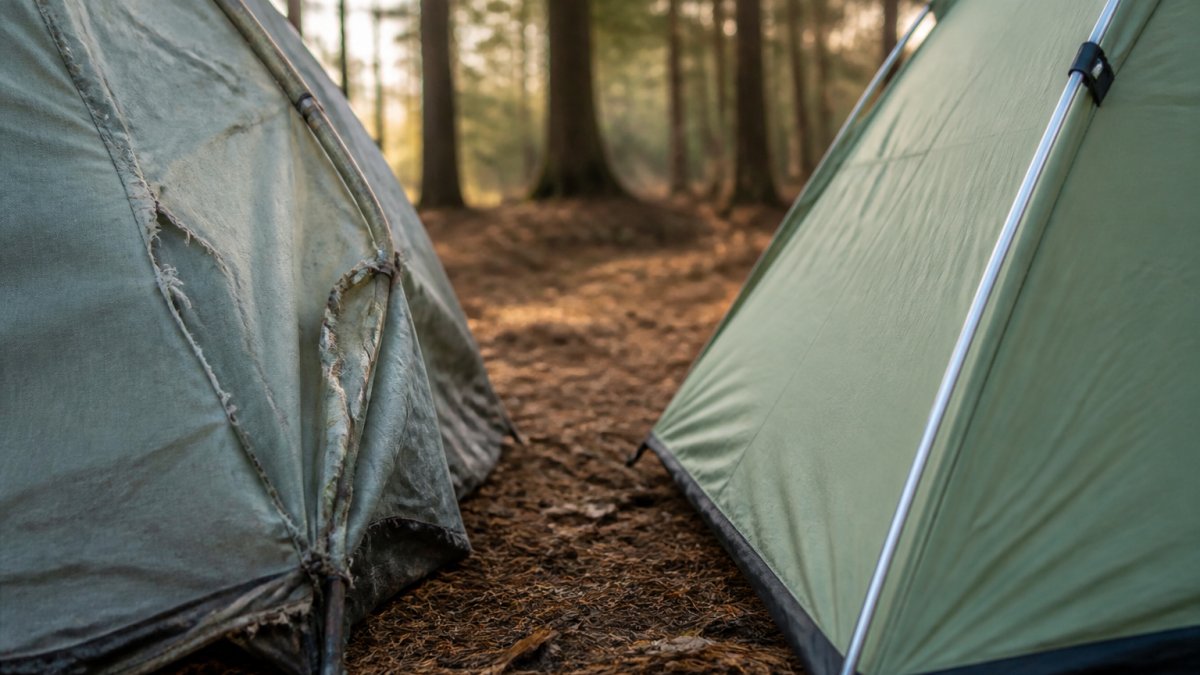
Stitching and hardware come next. Look at the seams, zippers, and poles.
The Federal Trade Commission's guidance on environmental marketing claims is a useful reminder that "premium" and "eco" labels are not regulated the same way, so read the specs rather than the badge.
| Component | Budget Gear | Premium Gear |
|---|---|---|
| Tent fabric | Thin polyester, low waterproof rating | Thicker denier, higher hydrostatic head |
| Poles | Fiberglass, prone to splintering | Aluminum alloy, flexes and recovers |
| Zippers | Basic coil, jams under load | Branded, smooth under tension |
| Sleeping bag fill | Loose synthetic, clumps over time | Dense synthetic or down, loft retained |
| Cookware | Thin aluminum, hot spots | Anodized aluminum, even heat |
Is Expensive Camping Gear Worth It for Backpacking?
For backpacking, premium gear is often worth considering, because weight and reliability matter more on the trail than at a drive-in site. Every extra pound compounds over miles, and a lighter shelter, sleeping system, and cookset can cut several pounds from your load.
That said, the payoff has limits. A beginner logging short weekend trips will not notice the difference between a mid-range pack and a top-shelf one. A thru-hiker covering long distances will.
A practical approach is to rent or borrow premium gear for your first few backpacking trips, then invest in the three items you carry closest to your body: boots, pack, and sleep system. Beginners can also start with our best backpacking gear for beginners list to see where money matters most.
Camping Gear Worth Spending Money On (and What to Skip)
Some categories reward spending, and others do not. Here is how we sort them.
Safety-Critical Upgrades
Spend here without hesitation:
- Shelter: A tent that leaks or collapses in wind is a safety problem, not an inconvenience. Look for a hydrostatic head rating and aluminum poles.
- Sleep system: A sleeping bag rated for conditions colder than you expect keeps you functional. Hypothermia starts with poor sleep, not dramatic weather.
- Footwear: Boots that fit and support your ankles prevent injury on uneven ground. If premium boots are out of reach, see our guide to the best alternatives to expensive hiking boots.
Convenience Upgrades You Can Skip
Save your money on these:
- Color and cosmetic options: They do not affect performance.
- Built-in gadgets: Lanterns with speakers or tents with built-in fans add failure points.
- Ultralight everything: Shaving ounces matters for thru-hikers, not weekend campers. The price jump is steep for gains you will not feel.
Durability, Lifespan, and Total Cost of Ownership
Sticker price is the wrong number to compare. For a deeper guide on choosing durable hiking gear that lasts, see our full breakdown. What matters is cost per year of usable service, which depends on how long the item lasts, repair costs, warranty coverage, and replacement frequency. Many gear discussions skip this math, which can lead campers to conclude that cheap gear is a bargain until a second replacement is needed.
The cost-per-year framework
Divide purchase price by expected seasons of use, then add repair and replacement costs.
Frequent campers often replace the cheapest gear two to three times over the life of one well-built item. That replacement cycle is the hidden cost, and a hidden time cost, since every failure means a disrupted trip, a processed return, or a scramble to borrow gear before a weekend.
What actually drives lifespan
Lifespan is the sum of the weakest components. On tents, failure points in order of frequency are zippers, seam tape, pole sections, and floor abrasion; on sleeping bags, loft loss from compression and dirty insulation; on pads, valve failure and baffle leaks; on packs, strap stitching and buckle hardware.
Fabric choice matters more than most shoppers realize. Higher denier fabrics resist abrasion longer, and higher hydrostatic head ratings resist coating breakdown from UV and repeated wet-dry cycles.
Repairability and parts availability
Before buying, check whether the manufacturer sells replacement pole sections, zipper sliders, stuff sacks, and footprint attachments. A tent whose poles are sold individually can stay in service for a decade; one with a proprietary pole set becomes disposable the day a section bends.
REI's expert guidance on gear care and repair offers practical maintenance advice that extends the life of any shelter or sleep system, and most manufacturers publish care instructions that matter more than any marketing claim.
Granite Peak Gear Hiking Tent for Outdoor Adventures →
Warranties: read the exclusions, not the headline
Warranty length matters less than what the warranty excludes. Many outdoor brands offer a limited lifetime warranty against manufacturing defects, but defects are narrowly defined: a broken zipper pull may be covered, while a zipper worn out from use is not.
Watch out: A "lifetime warranty" that requires you to ship the item at your own expense and wait weeks for evaluation can cost more in shipping and lost trips than a modest repair fee from a brand with a real service department.
When cheap gear genuinely wins on total cost
Total cost of ownership does not always favor premium. If your use is light, a few fair-weather car-camping weekends a year, gear stored dry, a budget tent or bag can last many seasons because it never meets the conditions that break gear. The math flips when you add wind, sustained rain, UV exposure at altitude, or frequent packing and unpacking.
Tips for Buying Used Outdoor Gear Without Getting Burned
Used gear can be a way to get quality at a lower price, if you inspect it carefully. Here is our checklist:
- Check tent seams for delamination or pulled stitching
- Flex every pole section and look for splinters or dents
- Zip every zipper fully, both directions
Watch out: Never buy a used sleeping bag or tent that smells of mildew. Mildew means moisture was trapped inside, and the damage is usually permanent.
Matching Gear to Your Use Case: Car Camping vs. Backpacking
Most gear advice collapses into "car camping versus backpacking," but that split is too coarse to spend money by. Four use cases cover nearly every camper, each with a different priority order and acceptable trade-off. Identify which one you are before you upgrade anything.
The occasional car camper
You camp a handful of weekends a year, drive to the site, and stay fair-weather. Priorities: a dry tent, a comfortable sleep surface, and a stove that lights reliably. Weight is irrelevant and durability requirements are low, so budget gear performs well here; the money you save is better spent on a better cooler, a thicker pad, or a canopy for rain.
The frequent car camper
You camp most weekends from spring through fall, often in developed campgrounds, sometimes in rain. Priorities shift toward durability and setup speed: a tent that takes twenty minutes to pitch becomes a chore by the tenth trip, while one with aluminum poles and color-coded clips pays for itself in patience. This is where mid-range gear beats both budget and top-shelf, serviceable zippers, replaceable poles, and a real rainfly without paying for ultralight fabrics you will never carry.
The backpacker
Every item must justify its weight, and reliability matters more than at a drive-in site because a failure happens miles from the car. Priorities: sleep system, shelter, pack, and footwear, in roughly that order. This is where premium gear can justify its price for many backpackers, through features such as lighter fabrics and higher-loft insulation. But the payoff scales with distance.
The severe-weather camper
You camp in shoulder seasons, at altitude, or in exposed terrain where wind and precipitation are expected rather than possible. Priorities: storm-worthiness and margin. This is where budget gear is genuinely unsafe rather than merely inconvenient. Look for a tent with a high hydrostatic head rating, a low-profile design, and guylines with real attachment points; a sleeping bag rated below the expected low; and a pad with an insulation R-value suited to cold ground.
A decision rule that survives all four
Buy premium for what you carry and for what protects you when conditions turn; buy budget for what you drive to and use in fair weather. Then apply one more filter: how bad is a failure? A failed cooler handle is an annoyance; a failed tent in a storm is exposure.
If you are comparing insulation types for cold trips, our breakdown of synthetic vs down sleeping bags for cold weather covers the trade-offs.
Finding Your Price Point at Granite Peak Gear Co.
You do not need to buy everything at once. Build your kit in stages, starting with the items that protect your safety and comfort.
Granite Peak Gear Co. offers tents at several price points so you can match gear to your budget and your trips. For solo hikers and couples, the Granite Peak Gear Hiking Tent is a lightweight three-season shelter for 1-2 people.

If you are new to backpacking and unsure where to start,
Frequently Asked Questions
Is expensive camping gear worth it for someone who only camps a few times a year?
It depends on the category. For occasional weekend camping, a mid-priced tent like the Granite Peak Gear Hiking Tent at $64.97 handles three-season use without the premium markup. Put your money into the items that fail dangerously, like sleeping insulation and rain protection, and save on convenience gear. A $400 tent only pays off if you camp often enough to wear out cheaper options or face conditions that demand the extra weather protection.
What camping gear is worth spending more money on?
Prioritize sleep and weather protection: sleeping pads and bags, rain shells, and the tent you rely on in storms. These affect safety and how well you function the next day. A leaking tent or a pad that loses air ruins a trip faster than a heavy stove. Cookware, lanterns, and camp furniture are fine at budget prices because a failure there is annoying, not dangerous.
How can I tell whether cheap vs. expensive camping gear is actually better quality?
Check the specifications, not the price tag. Look at waterproof ratings (a 3,000mm to 4,000mm hydrostatic head handles steady rain), pole material (aluminum alloy outlasts fiberglass), fabric denier, and seam construction. The Camping Mountaineering Rain-proof Camping Tent, for example, lists 4000mm waterproofing and 7001 aluminum alloy poles at $297.41, which tells you what the extra money buys. Ask about warranty and repair support too.
What should I check before buying used outdoor gear?
Inspect seams, zippers, and pole joints first, since these fail most often. For tents, set it up and check the floor and fly for pinholes and delamination. For sleeping bags, confirm the loft recovers after compression and there is no mildew smell. Ask how many seasons the item has seen and whether it was stored dry. Skip anything with a broken zipper or a bent pole unless the price reflects the repair cost.
The difference between a good trip and a miserable one usually comes down to a handful of gear decisions. Spend on shelter, sleep, and footwear, save on the rest, and replace items only when they fail you. Get started with Granite Peak Gear Co. and build a kit that keeps you warm, dry, and ready for the next trip.

