

Cart
0

Last Updated: October 28, 2026
Quick Summary
Down sleeping bags win on warmth-to-weight and packability for dry cold, while synthetic sleeping bags retain warmth when damp and cost less. Choose down for dry forecasts and synthetic for rain, humidity or multi-day trips, and compare bags at the same tested temperature rating rather than by fill type.
- Down traps air in lofted clusters, while synthetic insulation uses a fixed manufactured fiber structure.
- A soaked down bag can leave you dangerously cold, and body heat alone will not dry it out.
- Synthetic bags often need more fill weight to match a high-fill-power down bag's rating, so they weigh more.
- Treat the comfort rating as your planning number and add a margin for cold sleepers.
- Synthetic bags tolerate rough use better, but collapsed synthetic loft cannot be restored.
Table of Contents
- Synthetic vs Down Sleeping Bags: The Cold-Weather Trade-Offs
- Best Sleeping Bag Insulation for Cold Weather
- Down vs Synthetic Sleeping Bag When Wet
- Sleeping Bag Temperature Ratings Explained
- Managing Condensation, Frost, and Overnight Moisture
- Durability, Lifespan, and Total Cost Over Time
- How to Wash and Dry a Sleeping Bag
- Choosing the Right Sleeping Bag for Your Trip
- Frequently Asked Questions
Synthetic vs Down Sleeping Bags: The Cold-Weather Trade-Offs
That single trade-off drives most of the decision. Below, we break down how each fill performs in wet weather and how temperature ratings work.
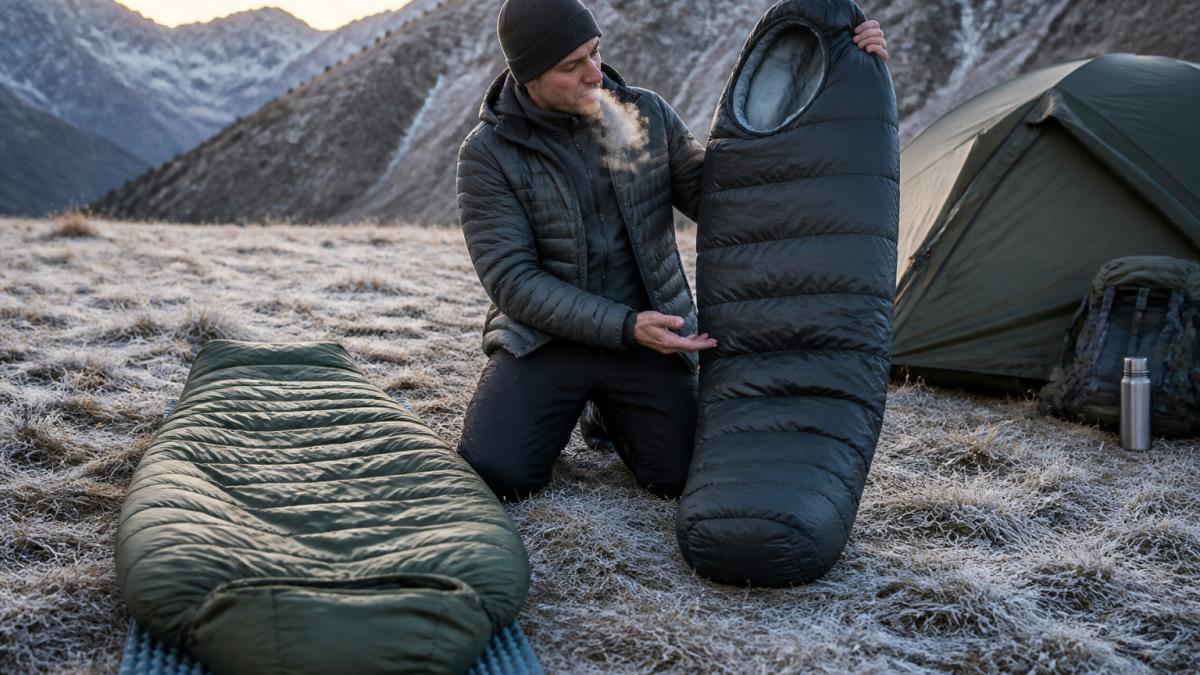
Best Sleeping Bag Insulation for Cold Weather
Down insulation is the cluster structure of a duck or goose's undercoat. It traps air in lofted clusters, and that trapped air is what keeps you warm.
Synthetic insulation is manufactured fiber, usually polyester, bonded into sheets or short filaments. It traps air in a fixed structure rather than loose clusters.
Down Insulation: Warmth-to-Weight and Packability
Our down-filled mummy sleeping bag uses 400T nylon fabric and a duck down fill rated at FP650, with a mummy structure.

Synthetic Insulation: Wet-Weather Reliability and Cost
For wet-weather trips, our waterproof, machine-washable synthetic sleeping bag pairs a waterproof shell with easy care, which suits damp forecasts and family camping alike.
Down vs Synthetic Sleeping Bag When Wet
Watch out: a soaked down bag on night two of a cold trip can leave you dangerously cold, and body heat alone will not dry it out.
Sleeping Bag Temperature Ratings Explained
Treat the comfort rating as your planning number and add a margin for cold sleepers. Your sleeping pad matters as much as the bag, since compressed insulation underneath you provides almost no warmth.
Compare Bags at the Same Tested Rating, Not by Fill Type
A synthetic bag often needs more fill weight to hit the same rating as a high-fill-power down bag, which is why it weighs more and packs larger at equal warmth. That is a real trade-off, but it is a measurable one rather than a marketing claim.
Ratings Assume a Pad and a Baseline Sleeper
For winter conditions, a mummy-style bag with a rated fill weight gives you the cold-weather margin you need. Our winter-rated mummy sleeping bag is built for exactly that use.
Outdoor Camping Sleeping Bag Thickened Down-filled Sleeping Bag →

Managing Condensation, Frost, and Overnight Moisture
Pairing your bag with an insulated pad also keeps ground moisture and cold from pulling heat out of the bag's underside. If you sleep on your side, our guide to the best sleeping pad for side sleepers covers how pad choice interacts with bag warmth.
Durability, Lifespan, and Total Cost Over Time
Synthetic bags generally tolerate rough, repeated use better, while down bags can be repaired and re-lofted to extend their life. The number that actually matters is cost per season of reliable warmth, not the sticker price on the hangtag.
What Wears Out, and How Fast
- Down: loft degrades gradually; a wash and tumble-dry with dryer balls can restore much of it, and a professional re-loft extends life further
- Synthetic: continuous filament resists tearing and shifting, but short-staple fills can migrate and clump over seasons; once the loft collapses, it cannot be restored
Cost Per Season, Not Cost Up Front
A cheaper synthetic bag that survives many seasons can beat a pricier down bag that gets soaked and mistreated. Conversely, a well-cared-for down bag used mainly on dry cold trips can spread its higher price across enough seasons to win on cost per night. Our double thickened cold-weather bag is a good example of a durable synthetic option for campers who want reliable warmth without a premium price.
How to Wash and Dry a Sleeping Bag
Watch out: a bag stored even slightly damp grows mildew, and mildew permanently damages insulation.
Choosing the Right Sleeping Bag for Your Trip
For a simple decision framework:
| Trip Condition | Recommended Fill | Why |
|---|---|---|
| Dry cold, weight matters | Down | Best warmth-to-weight and packability |
| Rain, humidity, multi-day | Synthetic | Retains warmth when damp |
| Family and weekend camping | Synthetic | Durable, affordable, easy care |
| Winter alpine, dry forecast | Down | Maximum warmth per ounce |
Frequently Asked Questions
What is warmer: down or synthetic insulation?
Down is warmer for its weight, so a high-fill-power down bag packs more heat into fewer ounces. Synthetic insulation needs more bulk to reach the same warmth, which is why synthetic sleeping bags are heavier and larger for a comparable temperature rating. That said, warmth depends on fill weight, construction, and fit as much as insulation type. For dry cold-weather trips where pack weight matters, down usually wins; for damp trips where the bag may get wet, synthetic's reliable warmth is worth the extra weight.
Does down or synthetic insulation stay warmer when wet?
Synthetic insulation stays warmer when wet. Its fibers keep loft and trap heat even after absorbing moisture, while down clusters collapse and lose insulation performance once soaked. Treated down sheds light moisture and dries faster than untreated down, but it is not waterproof. If you expect rain, humidity, or condensation inside the tent, a synthetic bag is the safer choice. Always pack either type in a waterproof storage sack or liner to limit exposure.
How should you choose a sleeping bag temperature rating for cold weather?
Match the bag's comfort rating, not its extreme rating, to the lowest temperature you expect at night, then add a margin of about 10 degrees Fahrenheit for cold sleepers and unexpected drops. Ratings assume a sleeping pad with adequate insulation, dry conditions, and a base layer. Check whether the rating is comfort or lower limit, since the two can differ by 10 to 15 degrees. For multi-day cold-weather trips, choose a bag rated below your forecast low and pair it with a warm pad.
How do you wash and dry a sleeping bag without damaging the insulation?
Use a front-loading washer on a gentle cycle with a mild, non-detergent soap made for down or synthetic fill, and skip fabric softener. For down, add clean tennis balls to the dryer on low heat to break up clumps as it dries; for synthetic, tumble dry on low and check for damp spots. Never dry-clean a sleeping bag, and never store it compressed. Once fully dry, keep it loose in a breathable storage sack so the insulation keeps its loft between trips.
Cold nights expose weak gear fast, and the wrong fill choice can turn a great trip into a miserable one. Granite Peak Gear Co. stocks down and synthetic sleeping bags built for cold-weather camping, backed by fast shipping, a quality promise on premium products, and hassle-free returns so you can gear up with confidence. Get started with Granite Peak Gear Co. and sleep warm on your next cold-weather adventure.


