

Cart
0

Last Updated: October 25, 2026
Quick Summary
The best camping alternatives to Decathlon are chosen category by category, not from one store. Match tent tiers to your worst expected weather, prioritize aluminum alloy poles over fiberglass, and buy shelter and carry systems before accessories. Our picks range from a $41.80 weekend tent to a $297.41 mountaineering shelter.
- Compare tents on waterproofing and pole quality first, then price and portability.
- Fiberglass poles are fine for calm car camping but splinter under stress; choose 7001 aluminum alloy for wind.
- The Large-Capacity Water-Resistant Multifunctional Hiking Backpack carries 70 liters and includes a rain cover for $131.67.
- New backpackers should buy in this order: shelter, sleep system, pack, then cookware and accessories.
- Buy hiking shoes early and break them in on training walks, not on the trip.
Table of Contents
- Why Campers Look Beyond Decathlon for Gear
- How We Compared These Camping Alternatives
- Best Camping Gear Brands for Budget-Minded Buyers
- Camping Tents Like Decathlon: Three Options by Budget and Weather
- Decathlon Backpack Alternatives for Multi-Day Treks
- Affordable Camping Gear Brands That Do Not Skimp on Durability
- What to Buy First: A Starter Gear List for New Backpackers
- Build Your Camping Kit at Granite Peak Gear Co.
- Frequently Asked Questions
Why Campers Look Beyond Decathlon for Gear
Decathlon built a reputation on value, but value means something different when a zipper fails at 11 p.m. in a rainstorm. Campers searching for the best decathlon alternatives for camping are usually not chasing a brand name.
At Granite Peak Gear Co., we hear this constantly from customers who bought budget gear once, watched it fail, and now want equipment they can trust for multi-day trips.
One clarification before we go further. "Decathlon alternative" does not mean a single store. It means a set of camping alternatives chosen category by category: tents, backpacks, cookware, and the small items that hold a kit together.
How We Compared These Camping Alternatives
We compared camping alternatives on five criteria that actually affect a trip: waterproof rating, packed weight, materials and build quality, price, and warranty or return terms. Every product below is judged against those five, not against marketing copy.
A common mistake is comparing tents on floor area alone. A tent that leaks or flexes in wind is useless no matter how much room it has. So waterproofing and pole quality come first in our scoring, followed by price and portability.
Here is the framework we used:
| Criterion | What We Checked | Why It Matters |
|---|---|---|
| Waterproofing | Hydrostatic rating on fly and floor | Keeps you dry in sustained rain |
| Weight and packed size | Carry weight, packed dimensions | Affects daily mileage on treks |
| Build quality | Pole material, fabric denier, fasteners | Determines how many seasons it survives |
| Price | Upfront cost in USD | Budget matters, but not alone |
| Returns and warranty | Policy clarity | Protects you if gear fails |
For context on how outdoor gear is rated and tested, the outdoor industry research from the Outdoor Industry Association is a useful starting point.
Best Camping Gear Brands for Budget-Minded Buyers
Budget-friendly camping gear does not have to mean disposable. The best affordable camping gear brands compete on materials and construction rather than on logos, and that is exactly where store-brand and direct-to-consumer gear has improved most in recent years.
Our recommendation is to buy fewer items and buy them well.
Watch out: the most common budget mistake is buying a tent with fiberglass poles for windy exposed campsites. Fiberglass is fine for calm weather and car camping, but it splinters under stress. If wind is likely, prioritize aluminum alloy poles.
Camping Tents Like Decathlon: Three Options by Budget and Weather
Camping tents like Decathlon's range fall into three practical tiers: entry-level weekend tents, mid-range three-season shelters, and storm-ready mountaineering tents. Matching the tier to your actual weather is more important than matching a brand, and the fastest way to choose is to compare the same five specs across every option: hydrostatic head on fly and floor, packed weight, packed size, pole material, and warranty or return window.
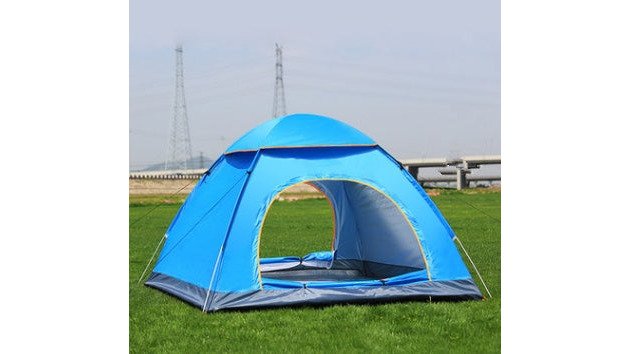
Here is how the three tiers compare on the criteria that decide whether a tent survives a trip:

| Tier | Model | Capacity | Fly / Floor Waterproofing | Pole Material | Packed Weight | Price | Best For |
|---|---|---|---|---|---|---|---|
| Entry | Camping Tent | 2P, 3P, 4P (4P: 200x200x135 cm) | Not rated for sustained rain | Fiberglass | Light enough for car camping; not a backpacking target | $41.80 | Fair-weather car camping and family outings |
| Mid | Double-Layer Outdoor Camping Tent | 2P | 1000mm-1500mm fly and floor | Fiberglass | Weekend-packable | $63.45 | Beginner hikers, sheltered campsites |
| Storm | Camping Mountaineering Rain-proof Camping Tent | 2P | 4000mm fly / 3000mm floor | 7001 aluminum alloy | Expedition-ready | $297.41 | Exposed terrain, mountain trips |
Entry tier: Camping Tent ($41.80). This is the weekend tent for fair-weather trips. It comes in 2-person, 3-person, and 4-person sizes, with the 4-person model expanding to 200x200x135 cm.
Mid tier: Double-Layer Outdoor Camping Tent ($63.45). A two-person shelter with a 1000mm to 1500mm waterproof rating on both fly and floor, 190T coated polyester, and a 190D Oxford groundsheet.
Storm tier: Camping Mountaineering Rain-proof Camping Tent ($297.41). This is the one for serious weather. The fly and floor both carry 4000mm and 3000mm waterproof ratings, the poles are 7001 aluminum alloy, and the fasteners are Donefu.
A common mistake is comparing tents on floor area alone. If you want a wider beginner-focused roundup before deciding, our guide to lightweight backpacking tents for beginners breaks down weight and packed size in more detail. When you are ready to commit to a two-person shelter, the double-layer outdoor camping tent is the model we would start with.

Pro Tip
Match the tier to the worst weather you expect, not the average. A $63.45 mid-tier tent is the right call for three-season weekend trips; a $297.41 storm-tier shelter is the right call if wind and sustained rain are on the forecast.
Decathlon Backpack Alternatives for Multi-Day Treks
Decathlon backpack alternatives should be judged on three things: capacity, harness comfort, and how the pack handles rain. Capacity gets all the attention, but a 70L pack with a poor harness will wreck your shoulders by day two.
The Large-Capacity Water-Resistant Multifunctional Hiking Backpack ($131.67) is our pick for multi-day treks. It carries 70 liters in a nylon body measuring 80x32x32 cm, and it ships with a rain cover included.
A common mistake is sizing up capacity before sizing the harness. If you are a larger-framed hiker, measure your torso length before ordering, and check the pack's stated dimensions against your own back length.
Double-Layer Outdoor Camping Tent →
For readers who want a concrete pack to compare against, the large-capacity water-resistant hiking backpack is the option we stock for exactly this use case.

Affordable Camping Gear Brands That Do Not Skimp on Durability
Durability in affordable camping gear comes down to four components: pole material, fabric denier, seam sealing, and fasteners. Get those right and a budget brand can last as long as a premium one. What most guides miss is that repairability is part of durability, and that field evidence beats spec-sheet claims. This section covers both, because a tent with replaceable poles and a pack with standard buckles can be fixed on the trail, while sealed-in components cannot.
Pole material. Aluminum alloy poles resist bending and splintering better than fiberglass.
Fabric denier. Higher denier fabrics resist abrasion on rocky ground.
Seam sealing. Taped or coated seams stop water from wicking through stitching.
Fasteners. Quality zippers and buckles fail less often in cold weather, when cheap plastic becomes brittle.
Repairability. Check three things before buying: whether replacement poles are sold separately, whether buckles and straps use standard widths, and whether the rain fly can be re-waterproofed with a spray-on treatment. A tent that passes all three can be kept in service for years; a tent with proprietary sealed-in hardware cannot.
Field evidence. Most practitioners find that the first failures show up at the seams and pole hubs after repeated pitching, not on the first trip.
Our cookware pick follows the same logic. The Widesea Outdoor Camping Cooking Cookware Set ($40.94) is aluminum alloy, packs as a two-piece pot set, and doubles as pot and bowl.
Key Takeaway
Durability is a checklist, not a brand: aluminum alloy poles, higher-denier groundsheet, taped seams, quality fasteners, and replaceable parts. Buy the tier that matches your weather, then maintain the seams and inspect the fasteners before every season.
What to Buy First: A Starter Gear List for New Backpackers
New backpackers should buy in this order: shelter, sleep system, pack, then cookware and accessories. That sequence protects you from the two failure modes that ruin first trips, which are getting wet and carrying weight badly.
Use this checklist as your buying order:
- Shelter: a tent rated for the weather you actually expect
- Sleep system: pad and bag rated to your lowest expected overnight temperature
- Pack: capacity matched to trip length, harness matched to your torso
- Cookware: a compact pot set and a reliable stove
- Rain protection: pack cover, shell layer, and dry bags
- Footwear: broken-in hiking shoes or boots with proper tread
- Small essentials: headlamp, first aid kit, water treatment, repair kit
If you want a complete reference before you spend anything, our essential backpacking gear list walks through every item with weight and budget notes. For curated picks by category, the best backpacking gear for beginners roundup is the faster read.
Watch out: do not buy footwear last and break it in on the trip. Buy hiking shoes early and wear them on training walks. Blisters end more first trips than bad tents do.
Build Your Camping Kit at Granite Peak Gear Co.
The real challenge is not finding camping alternatives. It is assembling a kit where every piece works with the others, at a price that does not require replacing it next season.
That is what we focus on at Granite Peak Gear Co. Our tents, backpacks, and cookware are chosen to cover the three tiers this guide describes, from a $41.80 weekend tent to a $297.41 mountaineering shelter. Every order ships fast, every payment is secure, and returns are hassle-free if a piece does not fit your trip.
Get started with Granite Peak Gear Co. and build a kit you can trust when the weather turns.
Frequently Asked Questions
What should I look for when choosing a camping gear brand?
Check four things before you buy: the waterproof rating on the tent fly and floor (1000mm handles light rain, 3000mm or more handles storms), the packed weight and capacity of any backpack, the pole and zipper materials, and the return policy. A brand that publishes exact specifications and honors hassle-free returns is a safer bet than one that only shows lifestyle photos. Granite Peak Gear Co. lists waterproof ratings, capacities, and materials on every product page so you can compare before ordering.
Are Decathlon products good quality for camping?
Decathlon gear generally holds up for casual weekend use, and its low prices make it a common entry point. The trade-offs show up in long trips and bad weather: budget tents often use fiberglass poles and thinner fabrics, and backpack harnesses may not fit every frame. If you camp a few times a year in mild conditions, it can work. If you plan multi-day treks or storm-season trips, spending more on a tent with a higher waterproof rating and aluminum poles usually pays off.
Which camping alternatives offer the best value under $150?
Look at the tent and backpack first, since those two items decide whether a trip stays dry and comfortable. The Camping Tent at Granite Peak Gear Co. starts at $41.80 in 2-, 3-, and 4-person sizes, and the Double-Layer Outdoor Camping Tent is $63.45 with a 1000mm to 1500mm waterproof rating. Pair either with the 70L Large-Capacity Water-Resistant Hiking Backpack at $131.67, which includes a rain cover, and you have a complete shelter and carry setup for well under what a premium tent alone costs.
How do I know a tent will hold up in rain and wind?
Read the waterproof coefficient on both the fly and the floor, and check the pole material. A tent rated 1000mm to 1500mm sheds light to moderate rain; a 3000mm to 4000mm rating is built for sustained storms. Aluminum alloy poles flex and recover in wind better than fiberglass, which can crack. The Camping Mountaineering Rain-proof Camping Tent at $297.41 uses 7001 aluminum alloy poles and a 3000mm to 4000mm waterproof rating, making it the storm-ready pick in this lineup.
What is the 20% rule for backpacking?
The 20% rule says your loaded pack should weigh no more than about 20% of your body weight. A 180-pound hiker, for example, aims for a pack under 36 pounds. That guideline shapes every gear choice: a lighter tent, a cookware set that nests, and a backpack sized to your trip rather than the biggest option available. Weigh your three heaviest items (shelter, sleep system, and pack) first, then let the rest of your gear list fill the remaining budget.


