

Cart
0

Table of Contents
- The Ten Essentials for Every Backpacking Trip
- Best Backpacking Gear for Beginners
- Sleeping Systems: Bags and Pads
- Shelter and Tents
- Footwear and Trail Shoes
- Backpacking Gear Weight Limits and Pack Selection
- How to Pack a Backpack for Hiking
- Ultralight vs. Traditional Gear: Finding Your Balance
- Frequently Asked Questions
Last Updated: October 4, 2026
The Ten Essentials for Every Backpacking Trip
The Ten Essentials represent the core items that every backpacker should carry, regardless of trip length or terrain. We've built our entire product philosophy around ensuring you have reliable equipment for wilderness exploration. These essentials aren't luxury items, they're the difference between a safe adventure and a dangerous situation.
The traditional Ten Essentials include navigation tools, sun protection, insulation layers, illumination, first aid supplies, fire-starting capability, repair kits, nutrition, hydration systems, and emergency shelter.
The Ten Essentials aren't a static checklist. Your specific selections depend on climate, elevation, and trip duration. A three-season trip requires different insulation than a winter expedition. A day hike needs lighter gear than a multi-day trek. The principle remains constant, carry these categories, but actual items shift based on conditions.
Pro Tip
Before every trip, audit your Ten Essentials against your specific destination. A tool that works for summer hiking may fail you in autumn. Swap items seasonally rather than carrying one static kit.
Best Backpacking Gear for Beginners
Starting your backpacking journey means prioritizing reliability and weight distribution over modern features. Quality mid-range gear from trusted manufacturers delivers good results for new hikers, avoiding both budget traps and untested premium equipment.
A solid beginner setup includes a 50-65 liter pack, three-season sleeping bag, lightweight tent, moisture-wicking base layers, and basic stove system. These items provide comfort and safety without overwhelming complexity.
The biggest decision beginners face is synthetic versus down insulation. Synthetic materials retain warmth when wet, making them forgiving for inexperienced hikers who might accidentally soak their gear. Down offers superior warmth-to-weight ratio but loses all insulating value when saturated. For your first trips, synthetic sleeping bags and jackets reduce the margin for error.
Weight matters, but beginners often obsess over ounces while ignoring critical items. A quality sleeping pad prevents hypothermia; a reliable tent keeps you dry. Focus on essential items first, then optimize weight within that foundation.
Key Takeaway
Your first backpacking kit should prioritize reliability and ease of use over ultralight specifications. You can optimize for weight after you understand what you actually use on the trail.
Sleeping Systems: Bags and Pads
Your sleeping system, bag and pad combined, determines whether you wake refreshed or exhausted. Most beginners underestimate the sleeping pad's importance.
Sleeping pad ratings use R-value, measuring thermal resistance. A three-season pad typically rates 2.0-4.0 R-value for spring through fall backpacking; winter expeditions require pads rated above 5.0.
Sleeping bags are rated by comfort temperature, the lowest temperature where the average sleeper stays warm. Comfort ratings vary between manufacturers and individual metabolism affects performance, so conservative sleepers should choose bags rated 10-15 degrees colder than expected conditions.
The U.S. Military Modular Sleep System documentation demonstrates how layering sleeping systems extends temperature range. Military personnel use patrol bags for warm weather and intermediate cold weather bags for colder conditions, stacking them for extreme cold.
Granite Peak Gear Co. offers military-surplus sleeping systems. The US Military Modular Sleep System (MSS) complete at $245.00 includes a patrol bag, intermediate cold weather bag, GORE-TEX bivy cover, and compression stuff sack.

Shelter and Tents
Your shelter protects you from wind, rain, and insects. Tent selection depends on weight, weather protection, and livable space. Three-season tents balance these for most backpackers, offering adequate weather resistance without excessive weight.
Tent design significantly impacts performance. Freestanding tents stand independently without staking; non-freestanding designs require staking but weigh less. The fly should extend to the ground on all sides, preventing rain splash. Good ventilation prevents condensation from soaking your gear.
A lighter tent reduces overall base weight, but inadequate shelter creates dangerous situations. The balance point is typically a three-season tent weighing 2-3 pounds, offering proven weather protection without excessive bulk.
A ground cloth extends tent life by preventing abrasion from rocks and roots. It's one of the most cost-effective durability investments, as a damaged floor can ruin your shelter system mid-trip.
Watch Out
Never assume a tent will keep you dry without testing it first. Many leaks appear only under specific conditions, heavy rain at certain angles, or condensation from your breath in cold weather. Set up your tent at home and run a hose over it before relying on it in the wilderness.
Footwear and Trail Shoes
Your feet carry you across miles of terrain, making footwear critical. Trail shoes feature stiffer soles for rocky terrain, deeper treads for mud and loose surfaces, and protective toe boxes for technical trails.
Boots provide lateral stability and ankle protection; trail shoes weigh less and allow greater mobility. Most experienced hikers choose trail shoes for responsiveness, reserving boots for steep terrain or heavy loads.
Fit matters more than brand reputation. Visit a retailer where staff watch you walk and recommend options based on your gait. Many discover they need wider or narrower shoes than assumed.
Moisture-wicking socks prevent blisters and fungal infections. Cotton retains moisture; synthetic or merino wool socks wick sweat away. Merino wool offers superior temperature regulation and odor resistance for multi-day trips.
Break in new footwear on short hikes before committing to a multi-day trip. Blisters develop from friction between new material and skin.
Backpacking Gear Weight Limits and Pack Selection
Pack capacity directly influences carrying comfort and trip sustainability. Most backpackers underestimate weight and overestimate capacity. A realistic assessment prevents injury and improves your hiking experience.
Base weight, total gear excluding food and water, determines additional carrying capacity. A typical three-season setup weighs 15-20 pounds without consumables.
Ultralight backpacking targets base weights under 10 pounds through meticulous gear selection. This works for experienced hikers; beginners often sacrifice durability or safety to hit weight targets.
USGI MOLLE II ACU Large Rucksack Field Pack Set Complete →
Pack torso length matters more than overall volume. Wrong torso length transfers weight to shoulders instead of hips. Measure from the base of your neck to hip bones; most packs come in small, medium, and large sizes.
The American Hiking Society guidelines on pack weight recommend carrying no more than 20-25% of your body weight for day hikes and 15-20% for multi-day trips. A 180-pound hiker should carry maximum 45 pounds on multi-day expeditions.
Granite Peak Gear Co. offers the USGI MOLLE II ACU Large Rucksack Field Pack Set Complete at $60.00, featuring 4,000+ cubic inches capacity and genuine military-grade construction. The MOLLE webbing system allows you to attach additional pouches, customizing your load-carrying setup. Military surplus packs like this one are engineered to distribute heavy loads, making them choices for backpackers carrying substantial gear.

How to Pack a Backpack for Hiking
Packing technique directly affects your comfort and the durability of your gear. The wrong packing method creates pressure points, unbalanced weight distribution, and damaged equipment.
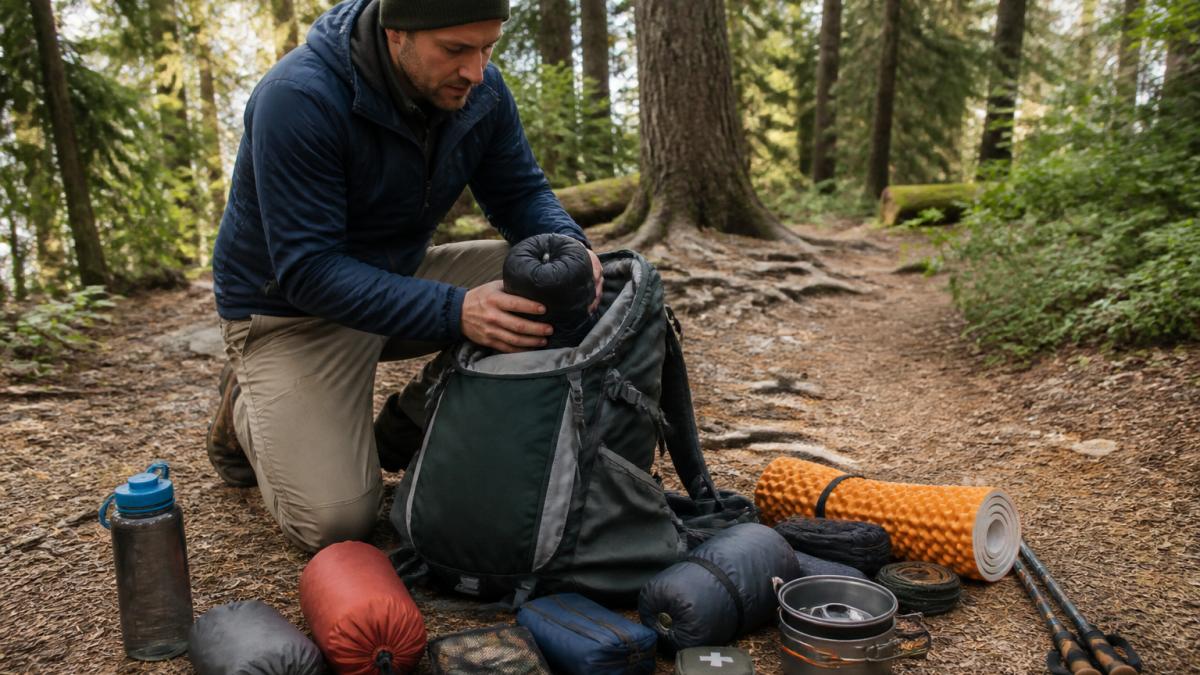
Organize items into categories: sleeping system, shelter, clothing, food, cooking gear, and safety items. Place your sleeping pad first for cushioning and structure. Your sleeping bag sits on top.
Heavy items go in the middle of the pack, close to your back. This positioning centers the weight on your hips, where your legs can support it.
Medium-weight items like clothing and shelter go around the heavy core. Lighter items like your first aid kit and repair supplies fill remaining spaces.
Compression straps cinch the pack tight, preventing internal movement. Loose gear bounces with each step, throwing off your balance and wasting energy.
The hip belt transfers weight from your shoulders to your hips. Adjust it so it sits on your hip bones, not your waist.
Ultralight vs. Traditional Gear: Finding Your Balance
The ultralight movement has transformed backpacking, showing that experienced hikers can explore wilderness safely with minimal gear.
Ultralight backpacking prioritizes weight reduction through careful selection and material science. Ultralight tents weigh under 2 pounds. Ultralight sleeping bags use premium down and specialized fabrics.
Traditional gear emphasizes durability, comfort, and redundancy. Traditional tents weigh 3-4 pounds but withstand rough handling. Traditional sleeping bags use more insulation, providing broader temperature ranges.
The practical answer lies between these extremes. Most backpackers benefit from "light" rather than "ultralight" gear, selecting quality items that weigh less without sacrificing durability or safety.
Experience determines your optimal approach. Beginners should prioritize reliability and comfort, accepting slightly heavier gear.
The Backpacking Light magazine's gear analysis provides detailed weight comparisons across thousands of products, helping you identify where weight reduction yields meaningful results.
Granite Peak Gear Co.'s military surplus options like the ACU /UCP MOLLE II Large Rucksack with Waterproof liner combo at $50.00 demonstrate that quality gear can be accessible.

Choosing essential backpacking gear requires balancing weight, durability, and cost against your specific needs.
Frequently Asked Questions
What are the 10 essential items for backpacking?
The Ten Essentials form the foundation of backpacking safety: navigation tools (map, compass), sun protection (sunscreen, hat, sunglasses), first aid kit, knife or multi-tool, fire starter, emergency shelter, extra food, extra water and water filtration system, extra clothes, and headlamp. Each item addresses a specific survival need. Navigation prevents getting lost; sun protection guards against UV damage; a first aid kit handles injuries; fire and emergency shelter provide warmth; extra food and water sustain energy; and a headlamp enables safe movement in low light. Carrying all ten significantly reduces risk on multi-day trips.
Is 40 lbs too heavy for backpacking?
For most backpackers, 40 lbs is at the upper limit of manageable weight. A comfortable base weight (gear and pack without food and water) typically ranges from 15-25 lbs, with total pack weight ideally staying under 30 lbs for day trips and 35-40 lbs for multi-day trips. Carrying 40 lbs regularly can strain your knees, hips, and lower back, especially on steep terrain. If your pack consistently weighs 40 lbs or more, consider upgrading to lighter gear, reducing non-essentials, or breaking your trip into shorter daily distances to minimize injury risk.
How do I choose the right backpack for a multi-day hike?
Start by measuring your torso length (from the base of your neck to your hip bones) to find the correct pack size. For multi-day trips, aim for 50-70 liters of capacity. Check weight distribution features: a padded hip belt transfers load to your hips (where your body handles weight best), and adjustable shoulder straps prevent strain. Look for MOLLE webbing or attachment points if you plan to add modular gear. Military surplus options like the MOLLE II Rucksack offer proven durability and modularity. Test the pack with weight before committing, and ensure it sits snugly without gaps between the pack and your lower back.
What sleeping system is best for three-season backpacking?
A three-season sleeping system typically pairs a sleeping bag rated 15-30°F with a sleeping pad rated R-value 3-5. The US Military Modular Sleep System offers versatility by combining a patrol bag (30-50°F), intermediate cold weather bag (-10-30°F), and a GORE-TEX bivy cover for wind and moisture protection. This layered approach lets you adapt to temperature swings without carrying separate systems. Down fill power (600-800) provides lightweight insulation; synthetic alternatives work better in wet conditions. Pair your bag with a quality sleeping pad to block ground cold, most of your heat loss comes from below, not above.
How should I pack my gear for better weight distribution?
Place heavy items (sleeping system, stove, food) close to your torso and centered between your shoulders and hips. Pack mid-weight gear (clothes, tools) around the heavy items. Keep lightweight items (rain gear, emergency shelter, first aid kit) on top for quick access. Fill empty spaces with stuff sacks to prevent shifting. Secure the pack's hip belt snugly so 60-70% of weight transfers to your hips, not your shoulders. Keep your center of gravity balanced front-to-back, a pack that leans backward strains your lower back. Distribute weight evenly side-to-side to avoid tilting or uneven muscle strain during long climbs.
What is the ideal base weight for backpacking in 2026?
Base weight (gear and pack excluding food, water, and fuel) ideally stays under 20 lbs for comfortable multi-day trips. Ultralight backpackers target 10-15 lbs by choosing minimal, high-performance gear; traditional setups range 20-30 lbs. Your ideal base weight depends on trip duration, climate, and personal comfort. Longer trips in harsh conditions justify heavier gear for safety and durability. Shorter three-season trips allow lighter options. Military surplus gear like the MOLLE II Rucksack ($50-160) offers durability without premium ultralight prices. Calculate your base weight by weighing each item, this reveals where cuts are realistic and where weight serves essential functions.
What gear upgrades matter most for 2026 backpacking?
Prioritize upgrades that directly impact comfort and safety: a quality sleeping pad with adequate R-value prevents hypothermia; a waterproof pack liner or bivy cover protects gear during rain; moisture-wicking base layers reduce cold-related illness; and a reliable water filtration system ensures safe hydration. Modern tents use lighter technical fabrics and improved pole designs. Trail runners or lightweight hiking boots reduce foot fatigue on long days. Digital navigation tools (GPS watch, smartphone app) complement traditional maps. Gear durability matters, military-grade materials like 1000D Cordura nylon outlast budget fabrics, reducing replacement costs over time.

