

Cart
0
Last Updated: October 23, 2026
Quick Summary
Is 44L too big for a day hiking bag? No, a 44L pack is not too big for a day hike, but it is bigger than most hikers need. It suits winter hikes, long remote routes, or carrying gear for kids, while a 20-30L daypack serves most summer hikes better.
- Most day hikers do well with 20 to 30 liters of capacity.
- A typical summer day-hike loadout fills only about half of a 44L pack.
- A 44L pack is justified when your gear list lands in the 30-44L range.
- If the main compartment is less than two-thirds full, the pack is oversized for that load.
- A loaded day pack in the 15-25 pound range is typical.
Table of Contents
- Is 44L Too Big for a Day Hiking Bag? The Straight Answer
- How Many Liters for a Day Hike? Real Capacity Ranges
- The Best Backpack Size for a Day Hike by Conditions
- Daypack vs Backpacking Pack: Where 44L Actually Fits
- A Realistic Day Hiking Backpack Packing List With Volumes
- Loaded Weight, Fit, and Comfort With a Larger Pack
- How to Stop Overpacking a 44L Pack
- Conclusion
- Frequently Asked Questions
Is 44L Too Big for a Day Hiking Bag? The Straight Answer
Is 44L too big for a day hiking bag? No, a 44L pack is not too big for a day hike, but it is bigger than most hikers need.
At Granite Peak Gear Co., we hear this question often. The honest answer depends on what you carry, not the number on the tag.
Day hiking packs run from about 10 to 45 liters, and the right pick shifts with season, terrain, and how much water you haul.
Key Takeaway
A 44L pack is a valid day-hiking bag for cold weather, long mileage, or group gear. For a short summer hike, a 20-30L daypack will carry the same load with less bulk.
How Many Liters for a Day Hike? Real Capacity Ranges
Most day hikers do well with 20 to 30 liters, which holds water, food, a rain shell, and a warm layer with room to spare.
Capacity is measured in liters of internal volume, and manufacturers calculate it differently, some count every pocket, others only the main compartment. That is why two packs labeled 30L can feel very different on your back.
Matching Pack Size to Trip Duration
Trip length is the first filter. Use this as a starting point:
| Trip type | Typical capacity | What it holds |
|---|---|---|
| Short summer walk, 1-3 hours | 10-20L | Water, snack, phone, light shell |
| Standard day hike, 3-6 hours | 20-30L | Water, lunch, rain gear, fleece, first aid |
| Long or winter day hike | 30-45L | Above plus insulation, extra water, emergency kit |
| Overnight trip | 45-65L | Adds shelter, sleeping gear, stove, food |
A 44L pack fits the long or winter day hike row. It also doubles as a lightweight overnight pack if you pack carefully.
How Gear Volume and Packing Style Change the Math
Two hikers can carry the same gear list and need different pack sizes. Bulky synthetic layers eat space. A down jacket compresses to a fraction of the size. Stuff sacks and compression straps shrink a load fast.
Packing style matters too: toss everything in loose and a 30L load fills a 44L bag; roll items tight and the same gear fits in a 35L pack.
The Best Backpack Size for a Day Hike by Conditions
Weather and distance drive pack size more than anything else. A summer stroll and a winter ridge walk are different sports.
Casual Summer Hikes vs Winter and Remote Routes
On a warm summer hike, you carry water, food, sun protection, and a light shell.
Winter changes the math: insulation you shed and re-add all day, a warmer shell, gloves, a hat, and often a headlamp.
Remote or technical routes add safety equipment, navigation tools, an emergency shelter, a repair kit, plus more water if sources are scarce. These are the trips where a 44L pack earns its place.
Watch Out
Carrying a big pack "in case" on a short summer hike pushes you to fill it. Extra weight slows you down and raises injury risk on rough ground. Match the bag to the trip, not to your worst-case imagination.
Daypack vs Backpacking Pack: Where 44L Actually Fits
A daypack is built for one day out, usually under 35 liters; a backpacking pack is built for overnight trips, usually 45 liters and up.
For day hiking, the trade-off is weight and bulk: a 44L pack weighs more empty than a 25L pack and catches wind on exposed ridges. The upside is flexibility, group gear, extra water, or a full winter layering system without strapping things outside.
How to Tell If Your 44L Pack Is Right for a Day Hike
If you already own a 44L pack, you do not need to buy anything. Run this fit-and-load test at home, then repeat it on a short local hike:
- Lay out your actual day gear. Not a hypothetical worst-case list, the items you carried on your last three hikes, plus the forecast-driven extras for this one.
- Pack it the way you would on the trail. Use stuff sacks and compression straps as you normally would.
- Check the fill line. If the main compartment is less than about two-thirds full, the pack is oversized for that load and will shift weight on descents.
- Cinch it down. Tighten the compression straps and load lifters. If the pack still feels like a barrel on your back, the volume is working against you.
- Weigh it. A loaded day pack in the 15-25 pound range is typical. If you are well under that and the pack is still two-thirds empty, a smaller pack will carry the same load more comfortably.
- Walk a mile. A short shakedown hike reveals whether the pack sways, rubs, or rides high. Fit problems show up fast once the load is on.
If the pack passes, gear fills at least two-thirds of the main compartment, the load stays stable when cinched, and the weight is reasonable, then 44L is not too big for your day hikes. If it fails, pack more deliberately for trips that justify the space, or size down to a 30-35L pack and keep the 44L for winter and remote routes.
When a Larger Pack Is the Right Call
A 44L pack is the better choice when:
Outdoor Sports Backpack For Cycling And Hiking 45L →
- You hike in cold weather and carry a full layering system you shed and re-add through the day.
- You are on a remote route where water sources are scarce and you haul 3-4 liters.
- You carry group gear, a stove, a filter, a shelter, or a first aid kit for the whole party.
When a Smaller Daypack Is Sufficient
A 20-30L daypack is the better choice when:
- You hike short summer routes and carry water, food, a shell, and a light layer.
- You move fast and want airflow on your back rather than a large padded panel.
- You are hiking on exposed ridges where a tall pack catches wind.
Best For
Hikers on long, cold, or remote day routes who need room for layers, extra water, and safety gear without strapping items to the outside of the pack, and who have tested that their real load fills at least two-thirds of the bag.
A Realistic Day Hiking Backpack Packing List With Volumes
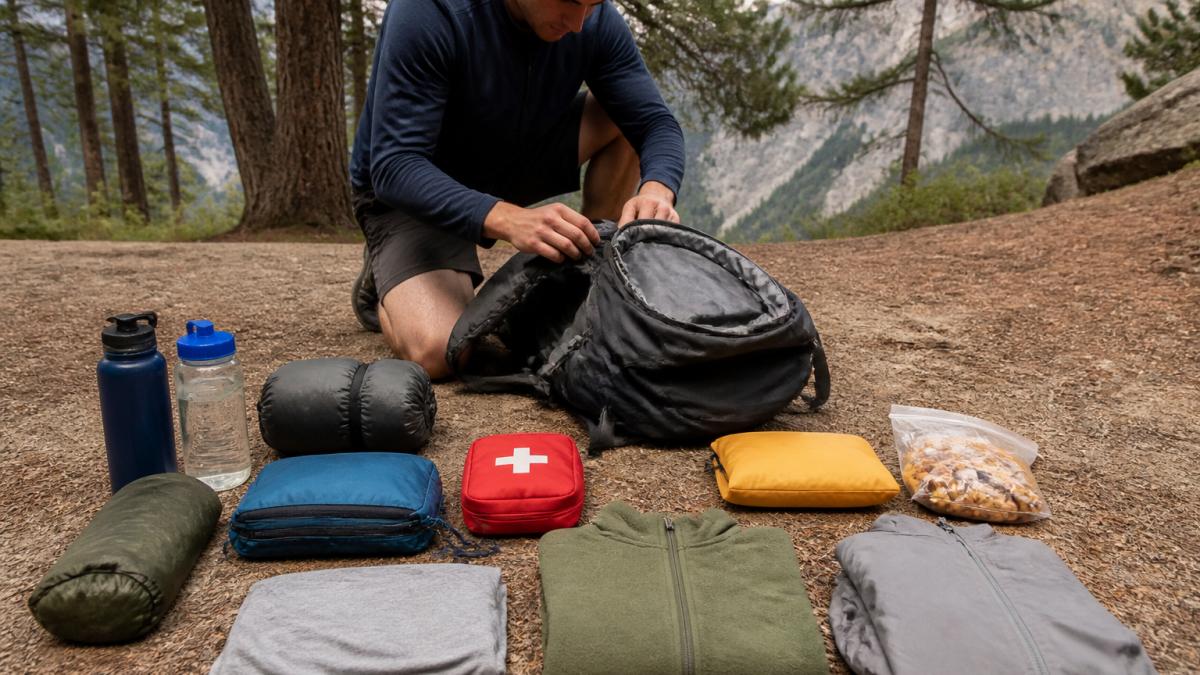
Here is a real loadout for a full day hike, with estimated volume by item. These are rough planning figures, the point is to show whether typical day-hike essentials actually fill 44 liters.
Water, Food, and Extra Layers
- Water: 2-3 liters, about 2-3L of space (bottles or bladder)
- Food and snacks: lunch plus trail snacks, about 3-5L
- Extra layers: fleece or light puffy, about 4-6L
That base load lands around 12-19L; add a warm hat, gloves, and sunscreen and you are still well under 25L for a summer hike. A standard three-season day hike fills roughly half of a 44L pack, fine if you have a reason for the space, a liability if you do not.
Weather and Safety Gear That Eats Space
Cold or wet conditions add bulk fast:
- Insulated jacket: 6-10L
- Extra warm layers and spare socks: 3-5L
- Emergency bivy or shelter: 1-2L
Now you are looking at 25-40L of gear, exactly where a 44L pack stops being overkill and starts being sensible. A winter day hike with a full layering system, a group first aid kit, and a stove can push past 35L before you add food.
The 44L Verdict by Loadout
Run the totals against the pack size:
| Loadout | Estimated gear volume | Fits a 44L pack? | Verdict |
|---|---|---|---|
| Summer day hike, 3-6 hours | 12-19L | Yes, with 25L+ to spare | Overkill unless you carry group gear |
| Summer day hike with camera or kid gear | 20-28L | Yes, comfortable | Reasonable if the extra gear is real |
| Shoulder-season hike with layers and rain | 22-32L | Yes, comfortable | Good fit |
| Winter day hike with insulation and safety kit | 30-40L | Yes, near full | Justified |
| Remote or technical route with group gear | 35-44L | Yes, full | Justified |
The pattern is clear: a 44L pack is right when your gear list lands in the 30-44L range, and more space than you need under 25L. In the 20-30L band, a 30-35L pack carries the same load with less bulk and less temptation to fill empty space.
Pro Tip
Weigh your loaded pack before you leave. A day pack that tops 20-25 pounds starts to feel heavy on steep ground, no matter how well it fits. If you are over that, look for gear to leave behind before you look for a bigger bag.
Key Takeaway
A typical summer day-hike loadout fills only about half of a 44L pack. The pack earns its size when cold weather, remote terrain, or group gear pushes your gear list past 30L.
Loaded Weight, Fit, and Comfort With a Larger Pack
A bigger pack only helps if it fits. Fit matters more than capacity once you pass about 20 pounds.
Start with torso length: the hip belt should sit on your hip bones and carry most of the weight.
Next, check the shoulder straps and load lifters. They should hug your body without gaps. A 44L pack with a poor fit will hurt more than a 25L pack that fits well.
Our 45L outdoor sports backpack uses an ergonomic back panel and a load-reducing carry system, which helps when the bag is full. If you want a lighter option for shorter trips, our 35L hiking backpack includes breathable padding and a built-in SOS whistle.


How to Stop Overpacking a 44L Pack
A large pack invites you to fill it. That is the real risk with 44 liters, not the size itself. Use these habits to keep the load honest:
- Pack for the forecast, not for every possible storm
- Lay out all gear first, then remove three items you probably will not use
- Use stuff sacks to compress layers and see the true volume
A simple rule: if you have not used an item on your last three hikes, leave it home. The space in a 44L pack is a ceiling, not a target.
Conclusion
The real question is not whether 44 liters is too big, but whether your gear and route justify the space.
At Granite Peak Gear Co., we build packs for exactly this kind of decision. Our 45L outdoor sports backpack offers an ergonomic back panel, load-reducing carry, and breathable materials for full days on the trail. Our 35L hiking backpack adds dry-wet separation and an SOS whistle for shorter routes.
Get started with Granite Peak Gear Co. and carry the right load with confidence.
Frequently Asked Questions
Is a 44L backpack too big for a day hike?
For a short summer hike on marked trails, yes, a 44L day hiking bag is more space than you need. Most day hikers carry 15 to 30 liters. A 44L pack earns its place when the day involves winter layers, emergency shelter, group gear, or remote terrain where you carry more safety equipment. The pack itself is not the problem; the risk is filling empty space with things you do not need. If you already own one, use compression straps and pack only your checklist.
How many liters do I need for a day hike?
Plan on 15 to 25 liters for a warm-weather day hike with water, food, a rain shell, and a light layer. Bump to 25 to 35 liters for colder weather, camera gear, or a long day with extra layers. Above 35 liters, you are usually carrying group gear, technical equipment, or emergency supplies for remote routes. A 44L pack sits at the top of the day-hike range and works best when conditions justify the extra volume.
Is a 45L backpack big enough for backpacking?
A 45L pack can work for an overnight trip or a weekend if your sleeping bag, pad, and shelter are compact and you pack light. It is tight for multi-day hikes where you carry food for several days. Many backpackers use 50 to 65 liters for weekend backpacking and thru-hike style trips. If you want one pack for both day hikes and light overnight trips, a 44L to 45L model is a reasonable crossover, provided the suspension handles the loaded weight.
What should I pack in a day hiking backpack?
Start with water (2 to 3 liters for a moderate day), food and snacks, a rain jacket, an extra insulating layer, a headlamp, a small first aid kit, sun protection, and a map or offline navigation. Add a lightweight emergency shelter and insulation for remote or winter routes. Lay everything out before loading the pack and cut duplicates. A day hiking backpack packing list keeps a 44L pack from becoming a catch-all for gear you will never touch on the trail.


