

Cart
0

Table of Contents
- Water Filter vs Chemical Tablets for Backpacking: The Core Trade-Off
- Speed, Weight, and Effort at a Glance
- Water Purification Tablets for Hiking: Coverage, Limits, and Safety
- How Long Do Water Purification Tablets Take?
- Backpacking Water Filter vs Purifier: Know the Difference
- Backpacking Water Filter Maintenance: Keep It Flowing
- Scenario Guide: Which Treatment Fits Your Trip
- Combining Methods: When Two Treatments Beat One
- Conclusion: Match the Method to the Mission
- Frequently Asked Questions
Last Updated: October 9, 2026
Water Filter vs Chemical Tablets for Backpacking: The Core Trade-Off
The water filter vs chemical tablets debate comes down to one question: do you want to remove pathogens physically, or kill them chemically? Filters push water through tiny pores that trap bacteria and protozoa on the spot. Tablets dissolve into the water and rely on a chemical reaction that takes time. Neither method is universally better, and the right answer depends on your water source, your timeline, and how much weight you're willing to carry.
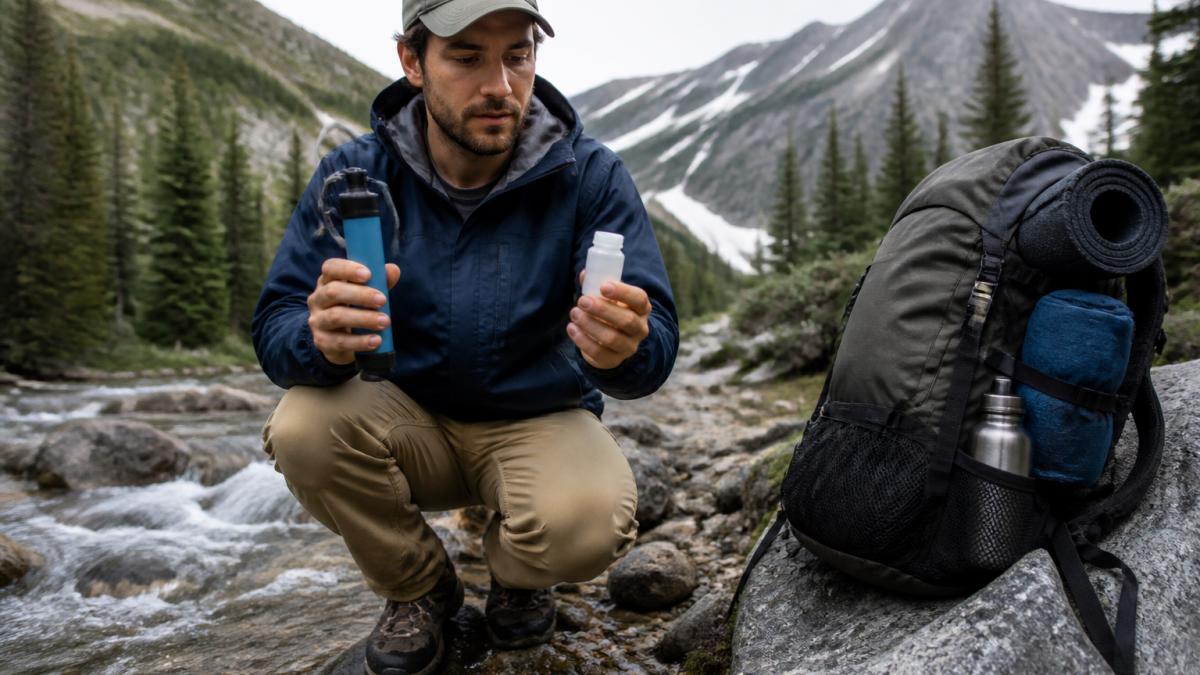
At Granite Peak Gear Co., we talk to backpackers every week who pack one method and wish they'd brought the other. The fix is understanding what each tool actually does before you leave the trailhead.
CDC guidance on backcountry water treatment
What Each Method Actually Removes
Mechanical filtration is the process of forcing water through a physical barrier with pores small enough to catch pathogens. Most backpacking microfilters use pores around 0.1 to 0.2 microns, which captures bacteria like E. coli and protozoa like Giardia and Cryptosporidium. What they don't catch is viruses, because viruses are small enough to pass straight through.
Chemical disinfection works differently. Tablets release chlorine dioxide or iodine into the water, which damages pathogen DNA and renders bacteria, protozoa, and viruses harmless. That virus coverage is the single biggest advantage tablets hold over filters.
| Pathogen Type | Filter | Chemical Tablets |
|---|---|---|
| Bacteria | Removed | Killed |
| Protozoa (Giardia, Cryptosporidium) | Removed | Killed |
| Viruses | Not removed | Killed |
| Sediment and cloudiness | Removed | Not removed |
| Microplastics | Removed | Not removed |
Speed, Weight, and Effort at a Glance
Most comparisons stop at "filters are fast, tablets are light." That's true but useless when you're packing for a specific trip. Here's the math that actually decides it.
Speed. A squeeze or hollow-fiber filter delivers drinkable water in under a minute per liter, often 30 to 60 seconds with a good squeeze. Tablets need contact time: 15 to 30 minutes for bacteria and viruses with chlorine dioxide, and up to four hours to inactivate Cryptosporidium. If you're filtering for a group, that gap compounds. Three hikers drinking two liters each at camp is six liters, six minutes of squeezing versus a single tablet drop and a 30-minute wait.
Weight, trip-level. A typical squeeze filter with a 1-liter pouch runs 3 to 5 ounces dry. A bottle of chlorine dioxide tablets (typically 20 to 50 tablets per bottle) weighs 1 to 2 ounces and treats 20 to 50 liters. Over a weekend, the filter is heavier. Over a two-week thru-hike, the filter's weight stays constant while tablet bottles multiply, a solo hiker treating 3 liters per day for 14 days needs roughly 42 tablets, or about two bottles. That's 2 to 4 ounces of tablets versus 3 to 5 ounces of filter, plus the filter's cleaning syringe (often another 1 to 2 ounces). The gap narrows fast.
Cost, trip-level. A basic squeeze filter runs roughly $25 to $40 and lasts hundreds to thousands of liters with cartridge replacement. A bottle of chlorine dioxide tablets runs roughly $10 to $15 for 20 to 50 doses. For a single weekend, tablets are cheaper. For a full season of weekend trips, the filter wins on cost per liter by a wide margin. Iodine tablets are cheaper still but come with the contraindications noted below.
Effort per liter. This is where filters quietly win for groups. Pumping or squeezing for three people gets old by day two. A gravity filter setup, bag, hose, filter, lets you hang 4 liters and walk away, which is why group leaders tend to carry one. Tablets require no effort at all, but they require waiting, and waiting at a dry camp with no water source nearby is its own kind of effort.
| Factor | Filter | Tablets |
|---|---|---|
| Time to drink (1 L) | Under 1 minute | 15 min - 4 hrs |
| Dry weight (solo, weekend) | 3-5 oz | 1-2 oz |
| Dry weight (solo, 2 weeks) | 3-5 oz + syringe | 2-4 oz |
| Upfront cost | ~$25-$40 | ~$10-$15 |
| Cost per liter (season) | Lowest | Higher |
| Group effort | High without gravity setup | None |
| Virus coverage | No | Yes |
Key Takeaway
Filters win on speed, sediment removal, and cost per liter over a season. Tablets win on upfront weight, simplicity, and virus coverage. For groups, a gravity filter plus a tablet backup is the pattern most experienced backpackers settle into.
Water Purification Tablets for Hiking: Coverage, Limits, and Safety
Water purification tablets for hiking are compact, lightweight, and effective against the full range of pathogens when you give them enough contact time. That's the catch: the label's wait time assumes clear water at roughly room temperature. Get either wrong and the treatment may not finish the job.
A common mistake is dropping a tablet into a bottle of cold, silty stream water and drinking after 30 minutes. Cold slows the chemical reaction, and sediment shields pathogens from the disinfectant. Pre-filter cloudy water through a bandana or coffee filter, then double the wait time in cold conditions.
Chlorine dioxide vs iodine: what the label doesn't tell you
Chlorine dioxide is the better all-around choice for most backpackers. It handles Cryptosporidium, which iodine struggles with, and it leaves less aftertaste. Iodine is cheaper and works faster against bacteria and viruses, but it's a poor fit for anyone with thyroid conditions, pregnant hikers, or people with iodine allergies. Iodine also stains bottles and tastes harsh. Check the label for contraindications before you rely on it.
How Long Do Water Purification Tablets Take?
Water purification tablets take 15 to 30 minutes in clear, room-temperature water for most products, but chlorine dioxide needs up to four hours to kill Cryptosporidium. Read the specific wait time on your product's label, because formulations vary.
Cold water, cloudy water, and other time killers
Temperature is the biggest variable. A stream fed by snowmelt can sit near freezing, and chemical disinfection slows dramatically in the cold. Cloudy water adds another problem: suspended particles give pathogens a place to hide from the disinfectant.
Treat these conditions as a signal to wait longer, not shorter. If you're impatient, boil the water instead. Bringing water to a rolling boil kills pathogens regardless of clarity or temperature, which is why it remains the reliable fallback when conditions turn against you.
EPA information on emergency water disinfection
Backpacking Water Filter vs Purifier: Know the Difference
A backpacking water filter removes bacteria and protozoa but not viruses. A purifier removes or kills all three, including viruses. That distinction decides which device you actually need.
In most backcountry areas, viruses aren't a major concern because human waste contamination is limited. In heavily used areas, near popular trails, or when traveling internationally, virus risk rises and a purifier becomes the safer pick. Some purifiers combine a filter with a chemical or UV stage to cover viruses too.
Watch Out
Buying a "filter" and assuming it handles viruses is one of the most common and dangerous mistakes. If virus protection matters for your trip, confirm the device is labeled a purifier.
Backpacking Water Filter Maintenance: Keep It Flowing
Backpacking water filter maintenance is simple, but skipping it is how filters fail mid-trip. After each use, backflush the filter with clean water to clear trapped sediment. Let it air-dry completely before storage so nothing grows inside. Replace the cartridge on the schedule the manufacturer gives, or sooner if flow rate drops noticeably.
Carry a backup method no matter how reliable your filter has been. A clogged filter on day three of a five-day trip is a trip-ending problem if you have no alternative.
Scenario Guide: Which Treatment Fits Your Trip
Match the method to the mission. Use this decision guide:
- Fast-moving solo day hike: Squeeze filter. Speed and simplicity win.
- Multi-day trip with clear water sources: Filter, plus tablets as backup.
- Murky or sediment-heavy water: Filter first, then treat chemically if virus risk exists.
- International travel or high-use areas: Purifier or filter-plus-tablets combo.
- Ultralight trips where every ounce counts: Tablets, accepting the longer wait.
- Group trips: Gravity filter for volume, tablets for backup.
Combining Methods: When Two Treatments Beat One
Combining a filter with chemical tablets covers every gap. The filter strips out sediment, bacteria, and protozoa fast, and the tablets handle viruses the filter can't touch. This two-step approach is the gold standard when water quality is uncertain or virus risk is real.
The order matters: filter first, then treat. Filtering removes the particles that would otherwise shield pathogens from the chemical, so the tablets work faster and more completely.
Pro Tip
On trips where water quality is unknown, filter your water, then add a tablet and wait the full contact time. You get clear, fast water plus full pathogen coverage.
Conclusion: Match the Method to the Mission
There's no single winner in the water filter vs chemical tablets for backpacking question, only the right tool for your conditions. Carry a filter for speed and sediment, pack tablets for virus coverage and backup, and know when to combine them.
Granite Peak Gear Co. stocks dependable packs, cookware, footwear, and tents built for the trips where clean water matters most. Our quality promise, fast shipping, and hassle-free returns mean you can gear up with confidence.
Add to Cart and get the equipment that keeps you protected from the trailhead to the summit.
Frequently Asked Questions
Do water purification tablets actually work?
Yes, when used correctly. Chlorine dioxide tablets are effective against bacteria, viruses, and Giardia, while iodine tablets handle bacteria and viruses but are less reliable against Cryptosporidium. Tablets need the full contact time listed on the label, and cold or cloudy water extends that time. They work best as a backup or for treating clear water when you want to save weight. Always follow the manufacturer's dosing and wait-time instructions.
How long do water purification tablets take to work?
Contact time varies by product and water conditions. Chlorine dioxide tablets typically need 15 minutes for bacteria and viruses, but up to 4 hours for Cryptosporidium in clear water. Cold water below 50°F or cloudy water can double those times. Iodine tablets usually require 30 minutes. Always read the label and add extra time for cold or murky sources. If you're in a hurry, a filter is faster.
Can you use a water filter and purification tablets together?
Yes, and it's a smart strategy for questionable sources. Run water through a filter first to remove sediment, protozoa, and bacteria, then add a purification tablet to knock out viruses. This two-step approach covers all three pathogen groups and keeps your filter from clogging as fast. It's especially useful in areas with heavy animal traffic or where water clarity is poor.
Do water filters remove viruses from backcountry water?
Most standard backpacking filters do not remove viruses because their pore size is too large. To remove viruses, you need a purifier, which combines a filter with a chemical, UV, or other virus-killing stage. In North American backcountry, viruses are less common, so many hikers rely on filters alone. If you're traveling internationally or treating water near human waste, choose a purifier or add tablets after filtering.

